Podcast 238 - Fins for Days

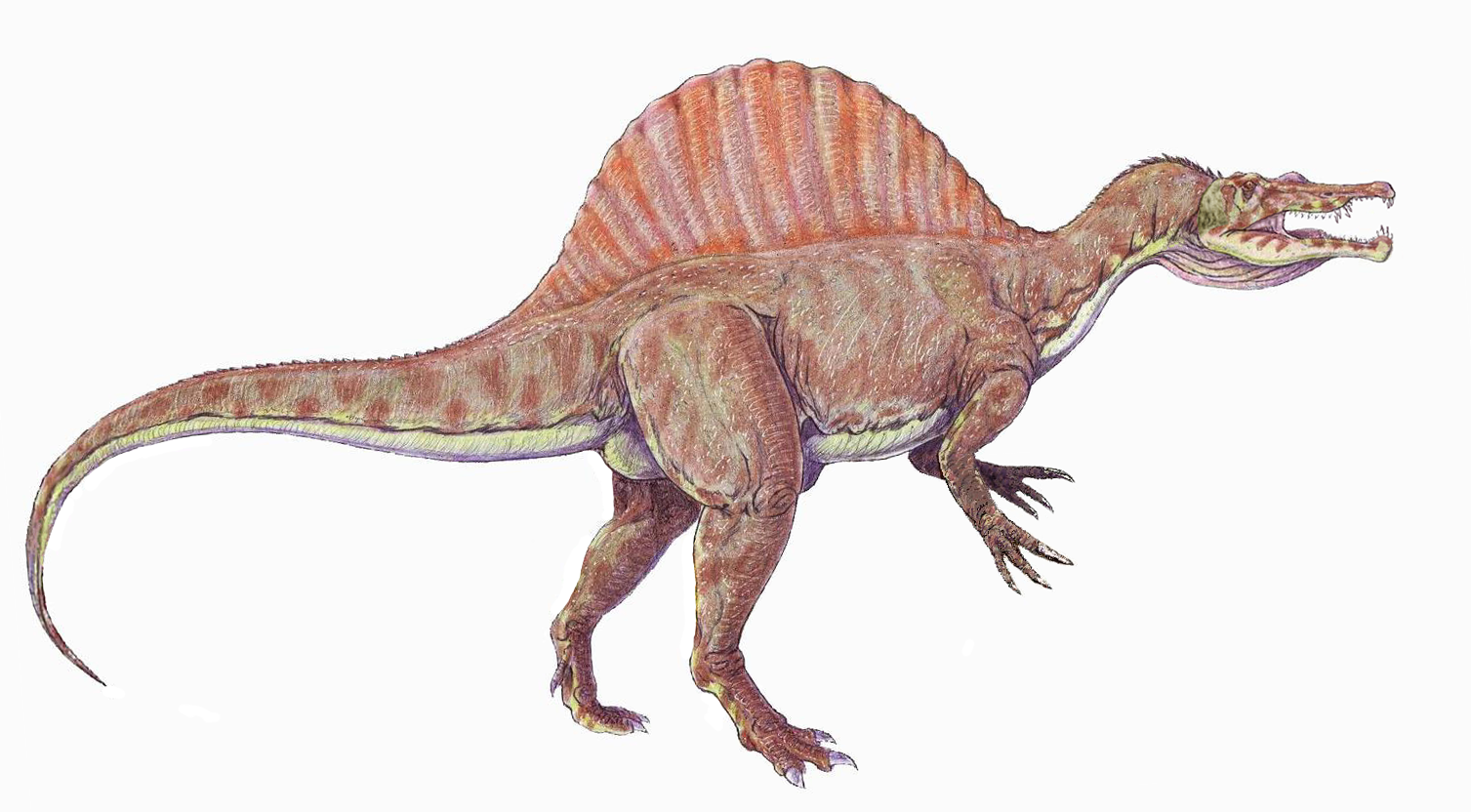
The gang discusses two papers that are united by a fin. The first paper uses a computer algorithms to infer the shape of mosasaur tail fins, and the second paper looks at a new species of Spinosaurus with a crest. Meanwhile, James tastes flavor, Amanda tastes drink, and Curt tastes indifference.

Up-Goer Five - SERVER NOT FOUND! HELP!

References:

Song, Yang, and Johan Lindgren. "Convergence in aquatic locomotion: reconstructing mosasaurian (Squamata: Mosasauria) tail fins from osteological correlates and covariation with extant sharks." Paleobiology 52.1 (2026): 121-130.

Sereno, Paul C., et al. "Scimitar-crested Spinosaurus species from the Sahara caps stepwise spinosaurid radiation." Science 391.6787 (2026): eadx5486.

Podcast 327 - Horse or Deer?

The gang talk about two papers about extraordinary dinosaur fossils and the unique information that can be gleaned from them. The first paper looks at fossil skin data on a Cretaceous iguandodontian, and the second paper uses an exceptionally complete specimen to demonstrate the reality of Nanotyrannus. Meanwhile, James classifies, Amanda imagines T-rex, and Curt brings a unique energy.

Up-Goer Five (Curt Edition):

The friends look at two papers about big angry animals that everyone loves to talk about. The first paper is about the skin of one of these big angry animals. This skin has weird bits on it that are not like the weird bits we see in a lot of other animals that are close to these big angry animals. These bits do not look like the bits that would be used to stay warm or to move into the air. These bits look like they might hurt.
The second paper looks at a lot of stuff from one big angry animal that has been said by people in the past is just a young one of another big angry animal. The paper looks at the parts of this animal, how this animal grew, and a lot of other things to show that, no, this animal is not this other animal. This animal is its own type of animal.


References:

Huang, Jiandong, et al. "Cellular-level preservation of cutaneous spikes in an Early Cretaceous iguanodontian dinosaur." Nature Ecology & Evolution (2026): 1-8.

Zanno, Lindsay E., and James G. Napoli. "Nanotyrannus and Tyrannosaurus coexisted at the close of the Cretaceous." Nature (2025): 1-3.

Podcast 326 - But What Is It?

The gang discuss two papers of odd fossils with exceptional preservation. The first paper looks at some Cambrian vertebrates and shows that soft tissue evidence suggests the presence of two sets of camera eyes (four eyes total), and they interpret the additional set of camera eyes as being a homolog to the modern parietal eye in vertebrates. The second paper uses exceptional preservation of the Rhynie Chert to test hypotheses for the taxonomic placement of the enigmatic Prototaxites and finds evidence that suggests it is not, as previously suggested, a fungus. Meanwhile, James is marooned by weather, Amanda accidentally traumatizes her cat, and Curt imagines the flesh trees.

Up-Goer Five (Curt Edition):

The friends talk about things that are weird. The first paper looks at a thing that is part of the big group that we are all a part of but is from a long long time ago and lived in the big blue wet thing. This thing has four eyes. Two of those eyes might be the things that become a part of the brain that is not the eyes today. But this shows that, early on, some of these animals could have had four eyes. This also means some animals we see later could have had parts of these other eyes that we have thought were other things.

The second paper looks at a thing that is weird that people thought was from a group that is not an animal but has some animal like things like eating other things but has walls in the cells. These weird things are from a long time ago and come from a place where the parts were saved from breaking down by glass getting inside the cells. This means you can see lots of cell stuff, and you can also break down the glass to get at some of the cell bits. This paper looks at a lot of this weird thing and they say that it is not part of the group people thought it was from. In fact, it is so weird that it is not like any group we have today. It is maybe something that is not around today that we did not know about.

References:

Loron, Corentin C., et al. "Prototaxites fossils are structurally and chemically distinct from extinct and extant Fungi." Science advances 12.4 (2026): eaec6277.

Lei, Xiangtong, et al. "Four camera-type eyes in the earliest vertebrates from the Cambrian Period." Nature (2026): 1-6.

Podcast 325 - The Curse of the Not Cat

Listeners, I’m going to level with you. This podcast is cursed. Not because of the content, which is mostly a pretty straight forward discussion about two papers that look into the fossil record of Nimravids (early cats that are not true cats). No, this podcast is cursed because the file refused to be compiled, crashing Audacity 3 times and each time corrupting the save file. The fact that any mp3 file was able to be compiled at all was a minor miracle. I can only assume that this means this podcast data has gained sentience and did not want to be born. I have no control over what happens when this mp3 file gets released into the internet… so anyways enjoy the episode!

Up-Goer Five (Curt Edition):

The friends talk about two papers that both look at things we can see in the hard parts of animals that are like cats but are not cats and use those hard parts to figure out what these not cats are doing. These papers looks at different not cats and try and see what types of food they would eat and how they would get that food. Turns out that many of these not cats were doing things that are not the same as the cats we have today.

References:

Castellanos, Miguel. "Hunting types in North American Eocene–Oligocene carnivores and implications for the ‘cat-gap’." Journal of Mammalian Evolution 32.2 (2025): 25.

Jiangzuo, Qigao, et al. "A new ecomorph of Nimravidae, and the early macrocarnivorous niche exploration in Carnivora." Proceedings of the Royal Society B: Biological Sciences 292.2059 (2025).

Podcast 324 - Pick Up the Pieces

The gang discusses two papers that use fragmentary fossils of animals to investigate the origins of major groups. The first paper describes an Early Ordovician eurypterid, and the second paper looks at mosaic evolutionary patterns in an early squamate. Meanwhile, James has bird opinions, Curt delights in not knowing, and Amanda will definitely be on time.

Up-Goer Five (Curt Edition):

The friends look at two papers that are using broken bits of things to learn a lot about animals from a long time ago. Both of these papers are looking at old animals that may give us new looks at how big groups of animals changed over time. These animals may be some of the first animals in these groups, or at least let us know what kinds of things those early animals could have been doing. The first paper looks at a group of animals that lived in the big blue wet thing a long time ago and are part of a group that today has animals that make homes that they use to catch food. The new parts this paper finds shows that this group may have come around a lot earlier than we thought. The second paper looks at parts from an animal that is in a group that is cold and has hard skin, some with legs and some without legs. These parts show that the early animals in this group had a lot of changes going on in their hard parts, maybe they changed more early on then they do today.

References:

Benson, Roger BJ, et al. "Mosaic anatomy in an early fossil squamate." Nature (2025): 1-7.

Van Roy, Peter, Jared C. Richards, and Javier Ortega-Hernández. "Early Ordovician sea scorpions from Morocco suggest Cambrian origins and main diversification of Eurypterida." Proceedings of the Royal Society B: Biological Sciences 292.2058 (2025).

Podcast 323b - "All Sales Final" Part 2 - A Representative Will Be With You Shortly

The crew of CS Perry were offered the perfect deal, a quick stop at an abandoned spaceport to grab some mothballed tech and they'd be set for life. What could possibly go wrong?


"Lightless Dawn" from Kevin MacLeod (incompetech.com)
Licensed under Creative Commons: By Attribution 3.0
http://creativecommons.org/licenses/by/3.0/

Podcast 323a - "All Sales Final" Part 1

For our holiday episodes this year, James, Curt, Amanda, and Ants get together to play a game of the space horror tabletop RPG Mothership. Join us for our introductory episode where we discuss the setting, rules, and the main characters of our story.

"Lightless Dawn" from Kevin MacLeod (incompetech.com)
Licensed under Creative Commons: By Attribution 3.0
http://creativecommons.org/licenses/by/3.0/

Podcast 322 - Obligatory Dinosaur Podcast 3: Dino With a Vengeance

The gang discusses two papers that are about dinosaurs, and that is all that connects them! The first paper investigates community structure during the Cretaceous, and the second paper describes a well preserved “mummy” of a duck-billed dinosaur. Meanwhile, Amanda is doing well (really she is now), Curt makes an awkward segue, and James has not seen Tremors.

Up-Goer Five (Curt Edition):

The friends talk about two papers about big angry animals from a long time ago. The first paper looks at how many types of big angry animals were in a place before something bad happened and all the big angry animals died. Lots of people have said that the big angry animals might have been in trouble before the bad thing happen, and lots of other people say that they were probably not in trouble but we just don't have a lot of places that have the big angry animals in them for us to look and see what is happening at that time. This paper looks at a place and shows that it was during the time we want to see and that the types of animals in a place were a lot like the types of animals in a place before, so that means that it does not look like these big angry animals were having a bad time before the bad thing happened.

The second paper looks at soft parts of a big angry animal that was dried out so that you can see skin and other bits under the skin. This lets the people find out what the feet look like for this animal, and other bits about how it moved.

References:

Flynn, Andrew G., et al. "Late-surviving New Mexican dinosaurs illuminate high end-Cretaceous diversity and provinciality." Science 390.6771 (2025): 400-404.

Sereno, Paul C., et al. "Duck-billed dinosaur fleshy midline and hooves reveal terrestrial clay-template “mummification”." Science (2025).

Podcast 321 - Getting Mostly Stems Here

The gang discusses two papers that have very little in common with each except for the word “stem”. The first paper uses birth death models to simulate the fossil record in order investigate if neutral models can produce patterns similar to the “crown”/“stem” evolutionary dynamics that have been observed in real data. The second paper investigates stem mandibulate fossils to investigate the timing of major key innovations in the evolutionary history of this arthropod group. Meanwhile, Amanda decides, James bullies, and Curt explains.

Up-Goer Five (Curt Edition):

The friends talk about two papers that have very little to do with each other, other than the fact that they have one of the same words in them. The first paper looks at the ways in which animals change over time and how they make more of each other and how the ways things live and die can make it look like there are some groups that do better than others. The paper shows that some of this is something we should see even if it is just because of how things make more things and the fact that we care more about the things that live today than the things that do not live today.

The second paper looks at how animals that have many parts that repeat make their arms and legs. This paper looks at very very old animals from groups that are not around today but maybe could be close to those groups. The group of animals today that this group is close to has a lot of things that all of them share, like that they make mouths from a lot of arms, and also they have things on the front they use to feel things, and that they are three parts. This paper is using these old animals that are close to this group to try and see which things today in this group appeared first, and which things may have taken some time before they appeared.

References:

Budd, Graham E., and Richard P. Mann. "The dynamics of stem and crown groups." Science Advances 6.8 (2020): eaaz1626.

Liu, Yao, et al. "A tiny Cambrian stem-mandibulate reveals independent evolution of limb tagmatization and specialization in early euarthropods." Scientific Reports 15.1 (2025): 19115.

Podcast 320 - von Herrerasaurus

The gang discusses two papers that investigate injuries in fossil bones. The first paper tests hypotheses about the causes of facial injuries in herrarasaurids, and the second paper tests if inferred hunting strategies map onto injury patterns in predators from the La Brea Tar Pits. Meanwhile, Curt provides some hypotheses, Amanda gets spiritual, and James is photogenic.

Up-Goer Five (Curt Edition):

The friends talk about two papers that look at why animals from a long time ago got hurt. The first paper looks at some very old and angry animals with no hair that all got hurt in the face. They try to see why these animals got hurt in the face. They look at all the ways that they could have got hurt in the face and find that it was probably other animals just like them that they lived with that probably hurt them in the face.

The second paper looks at two groups of animals that eat other animals. One group of animals is man's best friend, and the other group of animals is from a group that does not care if man lives or dies. Since these two groups of animals are old and from a long time ago we don't know really what they ate but we use other things to come up with thoughts on how they could eat. We look to animals today that are like these animals and think that maybe these old animals ate the same way. But, trying to eat other animals is hard and can get you hurt, and you can get hurt in a lot of the same ways if you jump or run. This paper looks at how they got hurt to see if this fits with how we think they would eat. Turns out that the ways they were hurt makes sense if they ate way we think they ate, with man's best friend running and man's not best friend running.

References:

Garcia, Mauricio S., Ricardo N. Martínez, and Rodrigo T. Müller. "Craniofacial lesions in the earliest predatory dinosaurs indicate intraspecific agonistic behaviour at the dawn of the dinosaur era." The Science of Nature 112.2 (2025): 1-12.

Brown, Caitlin, et al. "Skeletal trauma reflects hunting behaviour in extinct sabre-tooth cats and dire wolves." Nature Ecology & Evolution 1.5 (2017): 0131.

Podcast 319 - CSI Crato Formation

The gang discusses two papers that use taphonomic experiments to test hypotheses about the paleo-environmental conditions of the Crato Formation. Meanwhile, Amanda has her daily requirements, James longs for the rack, Curt launched a new podcast concept, and no one on this podcast can keep to a topic for longer than five minutes.

Up-Goer Five (Curt Edition):

The friends talk about two papers that look at rocks that come from the same place. This place is a spot where you get a lot of soft things from animals in the rocks which would usually not be able to be in the rocks because they would get broken up and lost. These two papers look at the types of animals we see in these rocks to see if that can tell us about the place where these animals with very soft parts were able to be saved. The first paper looks at small animals with many legs that stick their food with points on their mouth. When these animals die their legs are pulled under them. But in these rocks, the legs are not like that. The people who wrote this paper took some of these animals and put them in water and also water with stuff in it that you put on food and makes food good to eat. They found that the animals in the water with the stuff that makes food good had legs that look like looked like the rocks. This would mean that these animals were in water that had this stuff in it.

The second paper looks at other small animals with soft things. These animals need to live in water and would not do well if the water had the stuff in it that the other paper said it did. Some people have said that maybe this means the animals got put in here and did not live in here. So the people who wrote this paper took dead animals and shook them to make it like they were moved to see what happened. They found that they could not have been moved because they break up easy when you try to move them. This means that the water must have had some times when it was just water and some times when the water had lots of stuff in it that makes food good.

References:

Downen, Matt R., Paul A. Selden, and Stephen T. Hasiotis. "Spider leg flexure as an indicator for estimating salinity in lacustrine paleoenvironments." Palaeogeography, Palaeoclimatology, Palaeoecology 445 (2016): 115-123.

Storari, Arianny P., et al. "Taphonomy of aquatic insects from the Crato Formation Lagerstätte (Aptian, Lower Cretaceous) under an actualistic look." Plos one 20.9 (2025): e0331656.

Podcast 318 - Derp Fish Returns

The gang discusses two papers that provide nuanced information to test when key innovations in vertebrate evolution occurred. The first paper looks at unique semi-terrestrial trace fossils in the early Devonian in order to determine the trace maker, and the second paper looks at fossils that could provide information about the origins of teeth. Meanwhile, Curt has theme park ambitions, James provides Amanda with new anxieties, and Amanda leaves it all to chance.

Up-Goer Five (James Edition):

The group talk about two papers that are looking at the earliest time things have been seen in the rocks. The first paper looks at some tracks in the rock left by animals with no legs that live in the water but can gasp air. We have looked at tracks from the same place before where the animals stuck their faces into the ground. The new tracks come in two forms. The first is where the animal took a rest and its bits that it uses to move in the water stuck in the ground. The other track is where it had to come out of the water and moved around on land. It used its head to pull it along as it moved. The track made by this is the same as tracks made by the same type of animal that still lives today. This is the oldest case of this type of animal moving on land and shows that animals with hard parts inside them began to move onto land in lots of different ways.

The other paper looks at the supposed earliest time we find teeth growing on skin. This is interesting because there are several ideas about why the teeth began to grow on the skin, so when it first started could help tell which of these reasons is true. The skin teeth bit has been considered the same as an animal with no legs that lived in the water that was found in younger rocks from a different place, but when studied up close it does not look like the thing it is named as. By using lights to look inside the rock and seeing whether it looks the same as skin teeth on living animals it is shown that the old skin teeth are not skin teeth at all but actually are parts of the skin of a different animal with no hard parts inside that has legs that move in many places.

References:

Haridy, Yara, et al. "The origin of vertebrate teeth and evolution of sensory exoskeletons." Nature (2025): 1-6.

Szrek, P., et al. "Traces of dipnoan fish document the earliest adaptations of vertebrates to move on land." Scientific Reports 15.1 (2025): 28808.

Falkingham, Peter L., and Angela M. Horner. "Trackways produced by lungfish during terrestrial locomotion." Scientific Reports 6.1 (2016): 33734.