
Podcast 326 - But What Is It?
/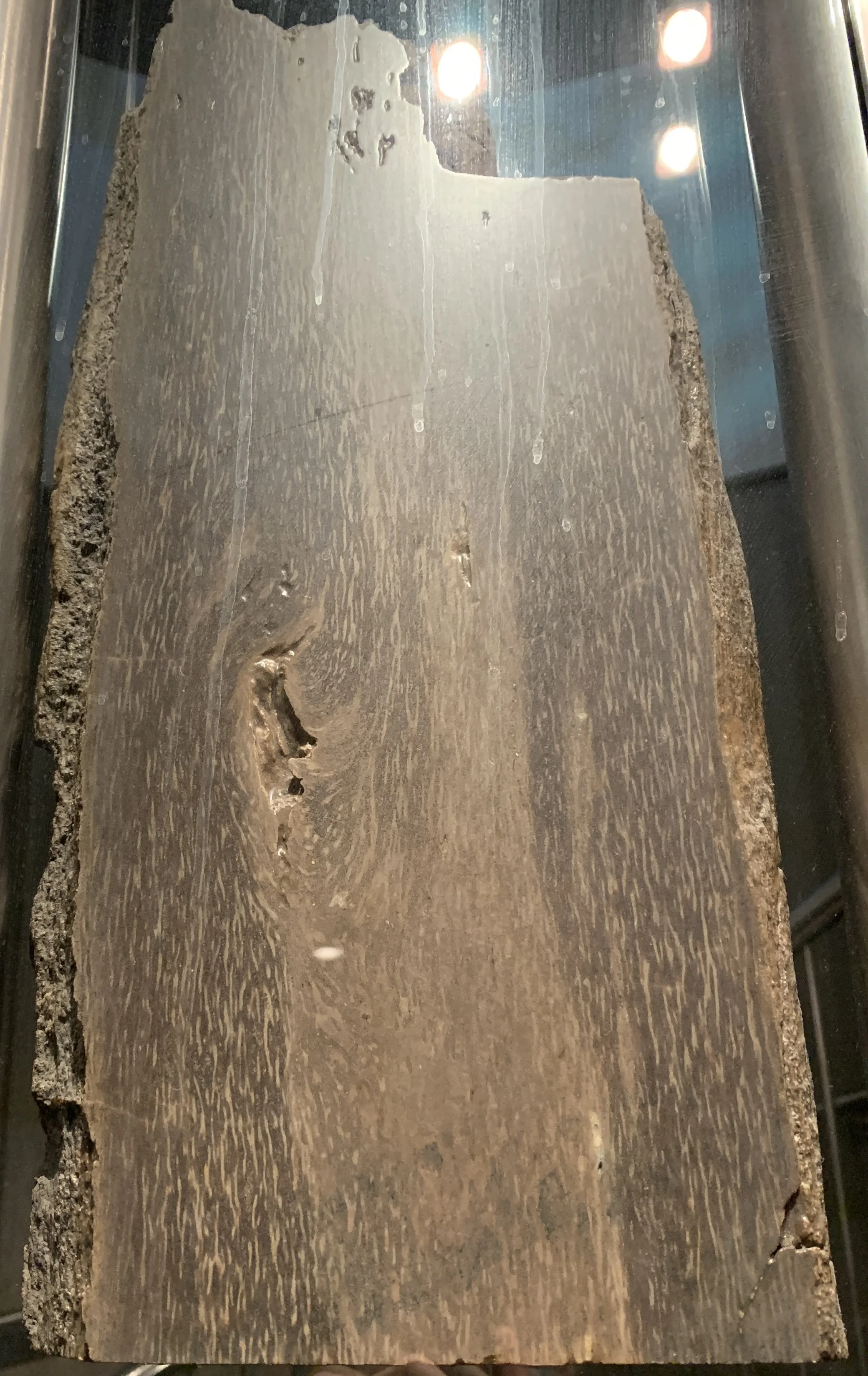
The gang discuss two papers of odd fossils with exceptional preservation. The first paper looks at some Cambrian vertebrates and shows that soft tissue evidence suggests the presence of two sets of camera eyes (four eyes total), and they interpret the additional set of camera eyes as being a homolog to the modern parietal eye in vertebrates. The second paper uses exceptional preservation of the Rhynie Chert to test hypotheses for the taxonomic placement of the enigmatic Prototaxites and finds evidence that suggests it is not, as previously suggested, a fungus. Meanwhile, James is marooned by weather, Amanda accidentally traumatizes her cat, and Curt imagines the flesh trees.
Up-Goer Five (Curt Edition):
The friends talk about things that are weird. The first paper looks at a thing that is part of the big group that we are all a part of but is from a long long time ago and lived in the big blue wet thing. This thing has four eyes. Two of those eyes might be the things that become a part of the brain that is not the eyes today. But this shows that, early on, some of these animals could have had four eyes. This also means some animals we see later could have had parts of these other eyes that we have thought were other things.
The second paper looks at a thing that is weird that people thought was from a group that is not an animal but has some animal like things like eating other things but has walls in the cells. These weird things are from a long time ago and come from a place where the parts were saved from breaking down by glass getting inside the cells. This means you can see lots of cell stuff, and you can also break down the glass to get at some of the cell bits. This paper looks at a lot of this weird thing and they say that it is not part of the group people thought it was from. In fact, it is so weird that it is not like any group we have today. It is maybe something that is not around today that we did not know about.
References:
Loron, Corentin C., et al. "Prototaxites fossils are structurally and chemically distinct from extinct and extant Fungi." Science advances 12.4 (2026): eaec6277.
Lei, Xiangtong, et al. "Four camera-type eyes in the earliest vertebrates from the Cambrian Period." Nature (2026): 1-6.
